
START WITH THIS SITUATION
The answer at a glance
It is late in the evening. Hokuto asks Haru, 「もうお風呂に入りましたか?」 She hasn’t taken a bath yet. She plans to take one later.
いいえ、入りません。
No, I’m not going to.
It sounds like you are skipping your bath tonight.
いいえ、まだです。
No, not yet.
Short, natural and clear. You will do it later.
いいえ、まだ入っていません。
No, I haven’t yet.
The full sentence. Also natural.

When someone asks 「もう〜ましたか?」 and the answer is “not yet,” use まだ. The 〜ません form answers a different question.
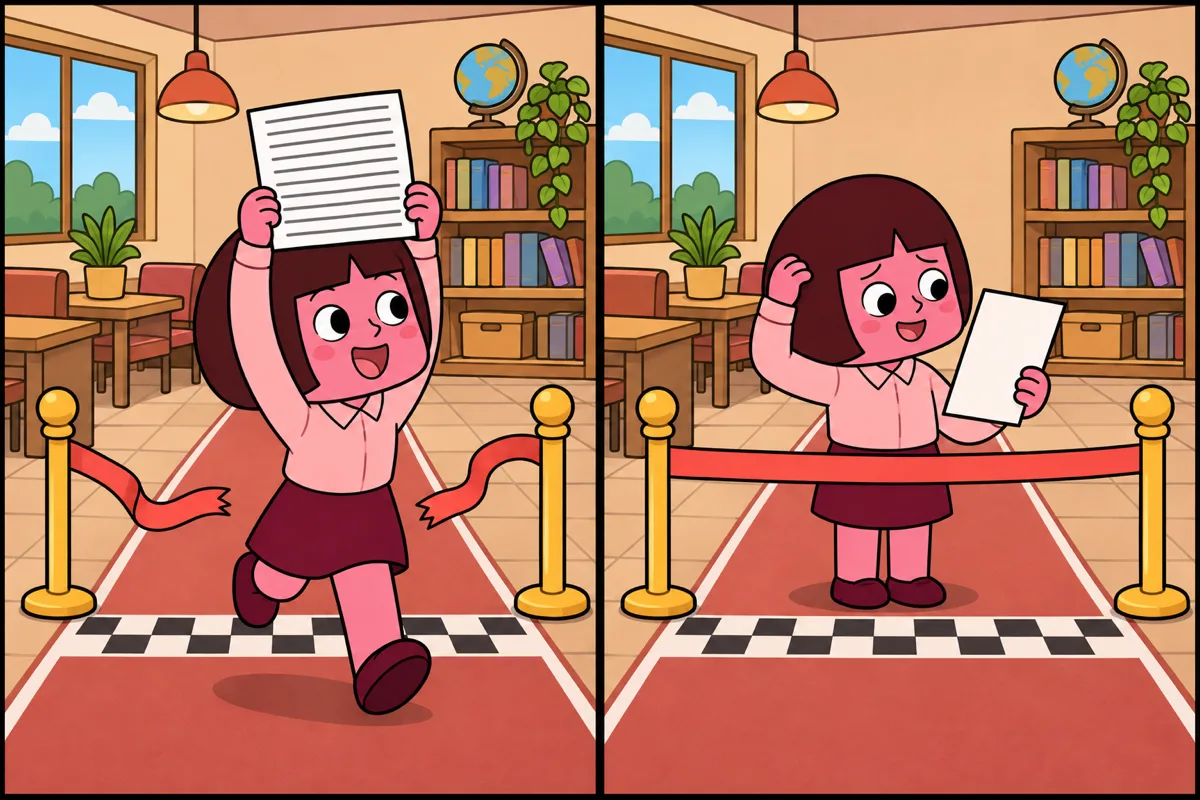
Picture a finish line.
Think of every action as a race with a finish line. The finish line is the moment the action is done: the meal is eaten, the homework is finished, the bath is over.
もう
already
You have crossed the finish line. The action is done.
まだ
not yet
You have not crossed it yet. The action can still happen.
宿題はもうやりました。
I’ve already done my homework.
もう goes with the past form 〜ました. You are on the far side of the line.
宿題はまだやっていません。
I haven’t done my homework yet.
まだ goes with 〜ていません. You are describing where you are now: still before the line.
Why “いいえ、しません” sounds off.
It feels logical. The question uses 〜ました, so the “no” answer should be 〜ません, right?
Not quite. The 〜ません form mostly talks about the future or about habits. 入りません means “I’m not going to take one” or “I don’t take baths.” It says nothing about the finish line.
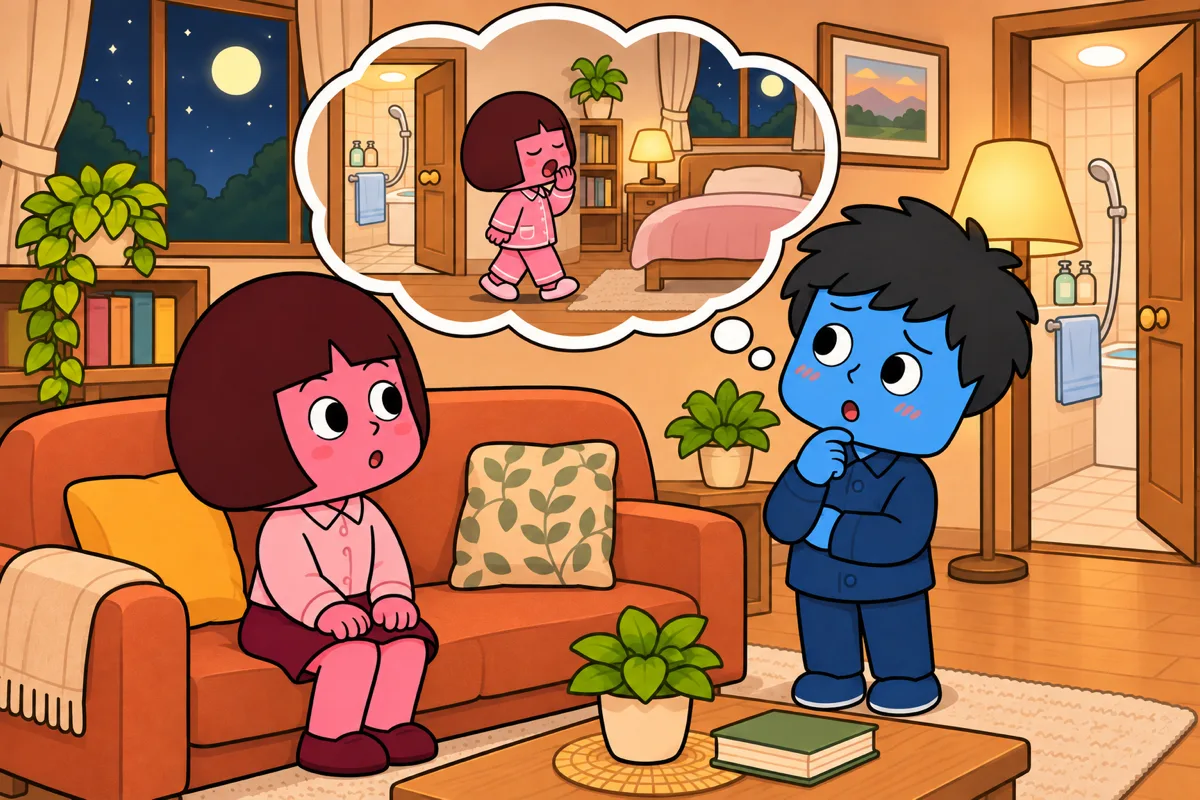
A: もうお風呂に入りましたか?
B: いいえ、入りません。
A: Have you taken a bath yet? B: No, I’m not going to.
B sounds like a decision about tonight, not a report on where things stand. That is why Hokuto was surprised.
The same thing happens with food. If a coworker asks 「もう昼ご飯を食べましたか?」 and you answer 「いいえ、食べません」, it can sound like you are not eating lunch at all today.
入りませんでした is past, but it closes the door: “I didn’t, and that chance is over.” It fits a finished time, like 「昨日はお風呂に入りませんでした。」 For something that can still happen today, say まだ〜ていません.
Three natural answers to 「もう〜ましたか?」
Here is the question again, this time at lunch: 「もう昼ご飯を食べましたか?」

はい、もう食べました。
Yes, I already have.
You are past the line. はい、食べました without もう is also fine.
いいえ、まだです。
No, not yet.
The shortest answer, and a very common one. You don’t need to repeat the verb.
いいえ、まだ食べていません。
No, I haven’t eaten yet.
The full sentence. Use it when you want to be clear, or add a reason after it.
With friends, the same answers become shorter: 「もう食べた?」「ううん、まだ。」 or 「まだ食べてない。」
Two more combinations: “not anymore” and “still.”
Swap the partners, and the meaning changes.
もう with a negative means “not anymore.” You did it before, and you stopped.

ピアノはもうやっていません。
I don’t play the piano anymore.
You used to, and you stopped. もう + negative = the action is over for good.
And まだ with 〜ています means “still.” The action started, and the finish line is not here yet.

まだ食べています。
I’m still eating.
You are in the middle of the race. Not done, but already running.
もう食べました: already ate
まだ食べていません: haven’t eaten yet
まだ食べています: still eating
もうやっていません: don’t do it anymore
Try it yourself.
Choose the answer that fits the situation best.
1. A friend asks about your homework. You haven’t started, but you will do it tonight.
「もう宿題やった?」「ううん、____。」
A. やらないB. まだやってない
Show answer 1
B. まだやってない。 You are still before the finish line. A sounds like you have decided not to do it at all.
2. A coworker asks if you have had lunch. You will eat after this meeting.
「もう昼ご飯を食べましたか?」「いいえ、____。」
A. まだですB. 食べません
Show answer 2
A. まだです。 B can sound like you are skipping lunch today.
3. You took piano lessons as a child, but you stopped years ago.
「今もピアノをやっていますか?」「いいえ、____やっていません。」
A. もうB. まだ
Show answer 3
A. もう You stopped, so it is “not anymore.” B would mean you haven’t started yet.

Say it out loud.
「もう〜ましたか?」 is one of the most common questions in daily life. People ask it about meals, baths, homework and work, and they expect an answer in a second or two. If you have to stop and think, 〜ません tends to slip out.
So say 「いいえ、まだです」 and 「まだ食べていません」 out loud five times today. Then ask yourself three もう questions about your own day, like 「もう朝ご飯を食べましたか?」, and answer each one out loud.
The next time someone asks, the answer will already be in your mouth.
Ready to use more of your Japanese?
Join our Free Masterclass to explore how to build a clear speaking practice routine, with guidance from Hokuto and Haru.
Join the Free MasterclassTHE PEOPLE BEHIND THIS LESSON
Meet Hokuto & Haru

Hokuto
Hokuto has taught 10,000+ hours of one-on-one Japanese lessons. A former paramedic, he began teaching Japanese as a volunteer and founded STRIVE in 2025. His coaching focuses on helping learners use Japanese with confidence in real conversations.

Haru
Haru helps learners develop natural, respectful Japanese for everyday conversations. Working alongside Hokuto, she supports learners with regular feedback and guidance as they put their Japanese into practice.